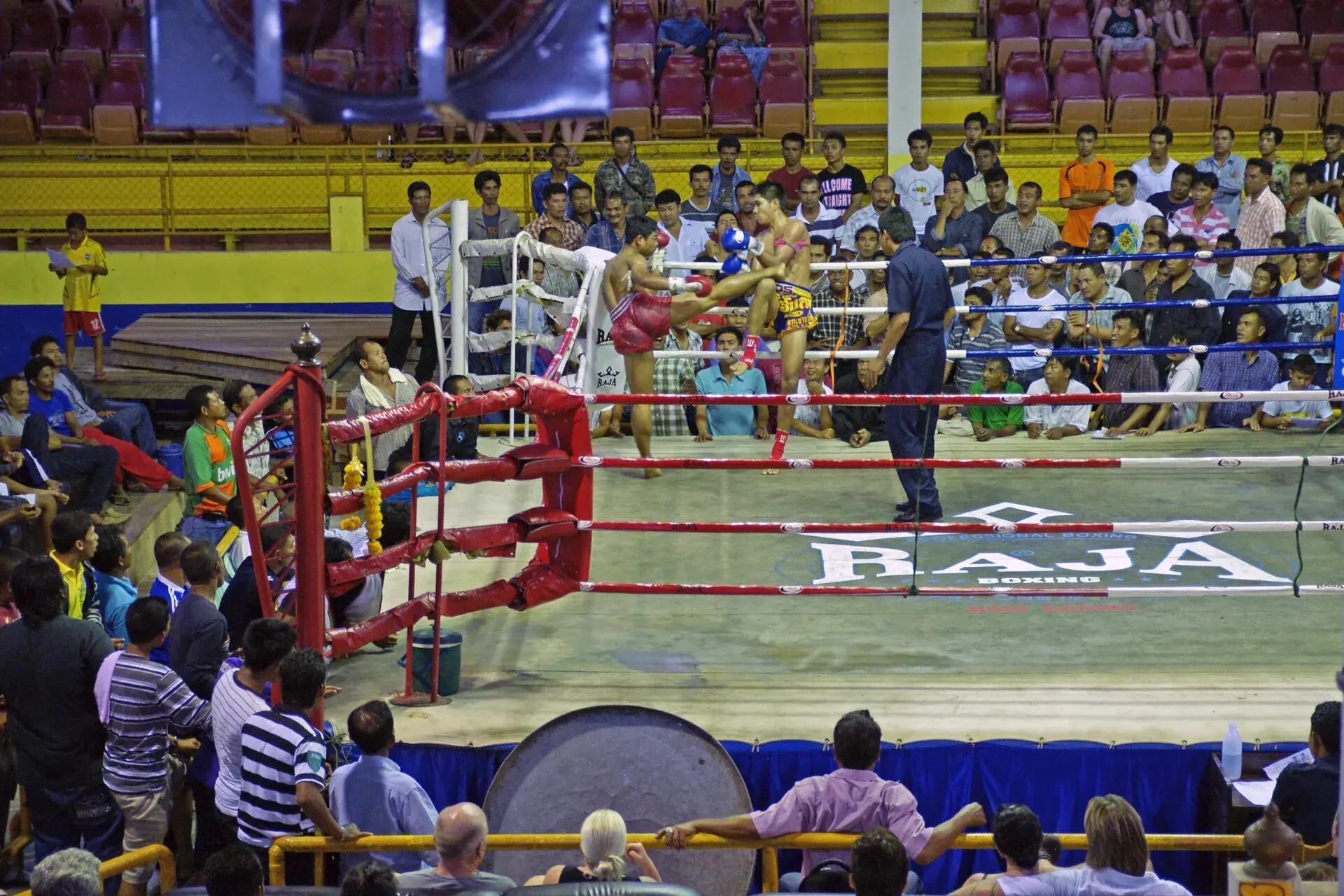
Contents
In brief
- Look for a camp that publishes its schedule: Santai and Sinbi announce two sessions a day, Monday to Saturday.
- For a long stay, Santai publishes plans up to 12 months and Tiger up to 3 months.
- Our sources do not say how to fight in Thailand: ask the camp how it matches its students.
Camps that train fighters
| Camp | City | What the listing says | Price, 1 month |
|---|---|---|---|
| PK Saenchai Muay Thai Gym | Bangkok | Traditional Muay Thai, demanding technical work, for students already at ease | Ask (no official site found) |
| FA Group Muay Thai | Bangkok | Clinch and knees, coaches who correct holds | Ask (no official site found) |
| Yokkao Training Center | Bangkok | Official site verified; programme to confirm with the camp | Not published |
| Santai Muay Thai Gym | Chiang Mai | Technical camp, 2 sessions a day Monday to Saturday | ฿11,000 |
| Sinbi Muay Thai | Phuket | 2 sessions a day Monday to Saturday, pads in every class | ฿8,000 – ฿12,000 |
| Tiger Muay Thai | Phuket | Large campus, groups by level up to advanced (price: Muay Thai only) | ฿13,500 |
| Phuket Top Team, Sumalee Boxing Gym | Phuket | Official sites verified; programme to confirm with the camp | Not published |
How a preparation camp runs
Three camps publish two sessions a day from Monday to Saturday. Here is the routine they list:
- Two sessions a day, Monday to Saturday, published by Santai, Diamond and Sinbi; Sunday is not listed as a training day.
- Pad work is at the heart of each class (at Sinbi: 5 × 3 rounds).
- Clinch, bags, supervised sparring and conditioning complete the volume; ask the camp for the exact split.
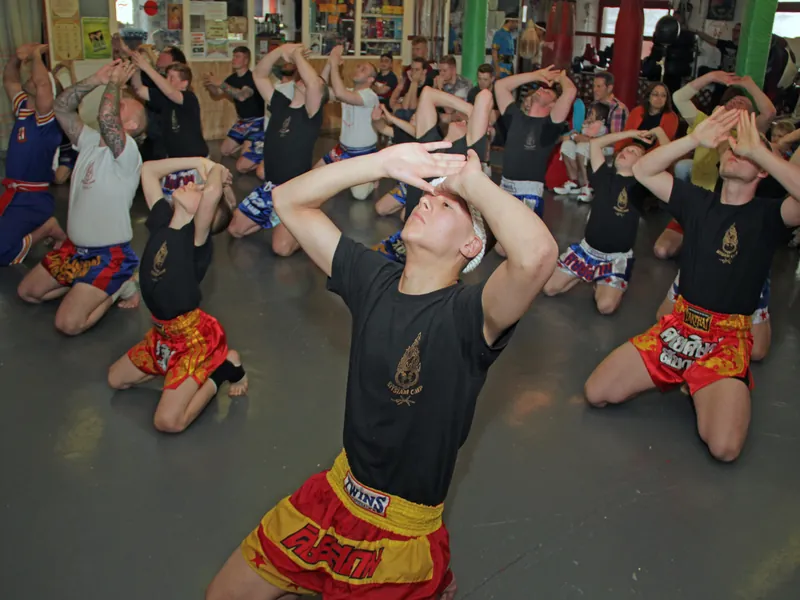
Making a living from Muay Thai
We publish no income or purse figures: they are not in our sources. What we can say is the administrative frame: the DTV visa lists Muay Thai classes among eligible activities, but the note we read says nothing about a right to work or to fight for pay. Ask Thai immigration before any paid activity.
The long-stay visa
Muay Thai classes are among the activities listed by the Thai foreign ministry for the Destination Thailand Visa (DTV). Ask the camp for the participation confirmation before you apply.
- Visa fee
- ฿10,000
- Validity, multiple entries
- 5 years
- Per entry, then extension
- 180 + 180 days
Proof of at least 500,000 ฿ in funds is required, as well as a participation confirmation from the camp for the Muay Thai category.
Relevant camps
กรุงเทพมหานครBangkok· Sathorn / Chan Road
PK Saenchai Muay Thai Gym
Authentic
A traditional Bangkok gym focused on technique and experienced trainees.
View the campPrices not published, ask the camp
กรุงเทพมหานครBangkok· Chatuchak
FA Group Muay Thai
Authentic
A family-run Bangkok gym known for its clinch and close-range work.
View the campPrices not published, ask the camp
เชียงใหม่Chiang Mai· San Kamphaeng
Santai Muay Thai Gym
Authentic
A technique-focused camp in the calm of northern Thailand, away from the island crowds.
View the camp- 1 day฿700
- 1 month฿11,000
ภูเก็ตPhuket· Rawai
Sinbi Muay Thai
Authentic
A Muay Thai camp in Rawai.
View the camp- One class฿600
- 1 monthfrom ฿8,000
ภูเก็ตPhuket· Soi Ta-iad, Chalong
Tiger Muay Thai
All-inclusive
A very large Muay Thai campus in Chalong, on the Soi Ta-iad training street.
View the camp- Muay Thai only, 1 week฿4,400
- Muay Thai only, 1 month฿13,500
กรุงเทพมหานครBangkok
Yokkao Training Center
Authentic
A Muay Thai camp in Bangkok.
View the campPrices not published, ask the camp
Frequently asked questions
Which camps should I pick to progress fast?
Three camps publish two sessions a day, Monday to Saturday, on their official page: Santai in Chiang Mai, Sinbi in Phuket and Diamond on Koh Phangan. For the others this schedule is not published: ask the camp for its programme.
What does a fighter stay cost?
It depends on the camp: Santai publishes up to 12 months (100,000 ฿), Tiger 3 months (34,500 ฿ for Muay Thai only). PK Saenchai and FA Group: ask.
Can I fight in Thailand?
Our sources do not say. Ask the camp how its students get booked and check the legal framework.
Which visa to stay a year?
The DTV visa (10,000 ฿, 5 years, 180 days per entry extendable by 180 days) lists Muay Thai classes. It needs a camp confirmation and 500,000 ฿ in proof of funds.
Going further
Useful guides
- DTV visa (Muay Thai): how to stay up to 5 years in Thailand10,000 THB · 5 years · 180 days per entry
- Travel insurance: which plans cover combat sports?World Nomads: Muay Thai covered on the Explorer plan
- Real budget: how much does 1 month of Muay Thai in Thailand cost?Tiger: 13,500 THB a month · Fairtex: 16,500 THB unlimited